
Summit altitude and the height of your camp
Acatenango's main summit reaches 3976 m. That figure is useful when considering the mountain, but the altitude where you sleep matters too. Camps belong to different programmes and should be considered individually. One published overnight itinerary describes its camp at approximately 3750 m; that is an example for that particular programme, rather than a standard height for every overnight hike.
La Soledad is the park access village. A departure from Antigua, arrival in the village and the start of walking are separate stages. Use the itinerary for your actual route when discussing the day's effort. A camp or cabin package helps organise the night, while the height, ascent and descent remain part of the physical commitment.
Route distance and elevation gain belong together
A local route description gives approximately 14 km out and back with about 1600 m of elevation gain. A different published two-day, one-night programme gives 15.5 km and 2094 m of ascent and descent respectively. Read these as separate programme profiles. Combining the distance from one with the elevation gain from the other creates a misleading description of the walk.
The initial route is described as steep, sandy and slippery, passing fields and forest. The summit approach includes steep sand and gravel, followed by a rocky, cold and wind-exposed summit. The descent deserves room in the plan as well as the climb. Walking times depend on the camp and programme, so a summit departure time from another itinerary is a poor measure of the effort ahead.
A guided hike with equipment
This hike includes water, warm clothing and a flashlight for your mountain preparations.
Hand-picked tours, booked through Viator. Prices are indicative starting prices in US dollars (as of November 2026). Tap a tour for live availability and the current price in your currency.
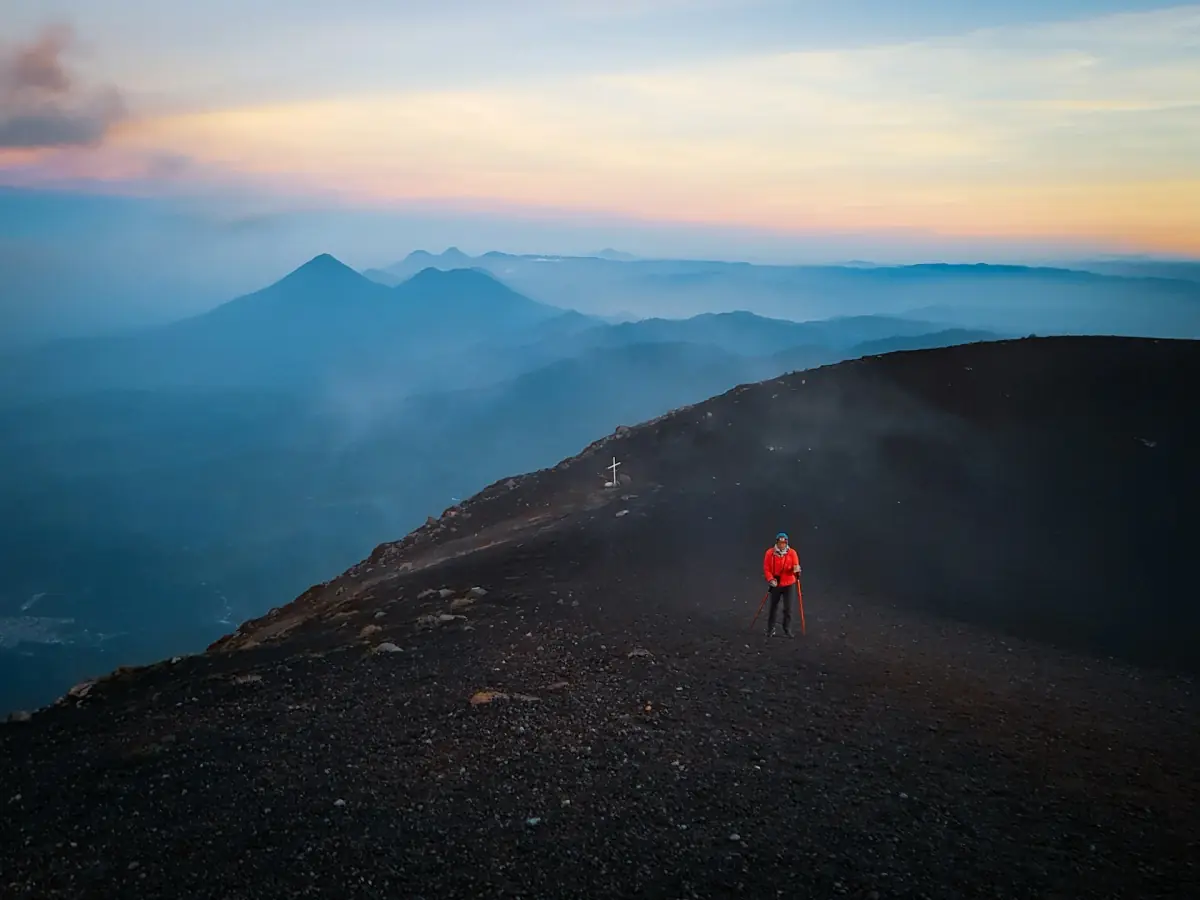
A guided hike with preparation included
The two-day Acatenango hiking option includes a guide, entrance fees, two liters of water and specified equipment, helping organise the practical side of the ascent.
Equipment for cold, rain and an early start
CONAP recommends suitable clothing and footwear for cold and strong wind at the summit. Pack for the exposed upper mountain as well as the walking below it. Gloves, a hat or scarf, a jacket with rain protection and waterproof packing for personal belongings feature in local preparation advice. A headlamp belongs in the plan for walking before daylight; warm clothing and sleeping equipment address a different need from rain protection.
Separate what you bring from what the package supplies. The guided two-day option includes gloves, a hat, jacket, flashlight and wooden walking stick, alongside meals, water and entrance. Its transport is for people taking the tour and has no stops. This is an organised hiking programme with equipment, rather than a standalone rental service. Compare the hiking options by their actual inclusions before deciding which items go in your pack.
Water lists, porters and rental equipment
One local packing list recommends at least 3 liters of water. A separate overnight programme asks participants to bring at least 4 liters. Those instructions belong to their respective itineraries, rather than forming a personal medical prescription. The two liters included in the guided option describe its supplied water. Discuss your programme's complete water plan instead of treating an included quantity as the whole packing requirement.
A published porter offer listed 200 GTQ per direction when accessed on 11 November 2026. Another programme describes a porter load of 40 lb, often shared between two hikers. These are separate offers: the load allowance is not a condition attached to the quoted price. Arrange carrying help around the actual programme and personal load. Equipment already stored at a camp also differs from personal belongings that still need carrying.
Altitude symptoms and turning back
The CDC's altitude guidance, published on 23 April 2025, explains that fitness does not protect against altitude illness. Headache after ascent may occur with dizziness, tiredness, appetite loss, nausea or vomiting. With symptoms, do not climb higher to sleep. If symptoms worsen despite rest, descend. Unsteady walking, altered awareness or breathlessness at rest call for immediate descent and urgent medical help, with accompaniment.
Consider medical advice about existing conditions before the trip. A stay in Antigua should not be treated as guaranteed acclimatisation for a high camp. Follow local access instructions and be ready to turn back for health or conditions; reaching the summit is only one possible part of the mountain experience.
Questions about preparation
Does being fit prevent altitude illness?
Fitness does not provide protection. Pay attention to symptoms during ascent and overnight, and tell the guide promptly when feeling unwell.
Is every camp at the same height?
Camp heights vary by programme. Use the sleeping altitude for your selected itinerary rather than applying the approximately 3750 m example to every camp.
Can a porter replace preparation?
A porter helps with carrying equipment. You still face the walking, altitude and cold, and need suitable personal clothing and a plan for the descent.